
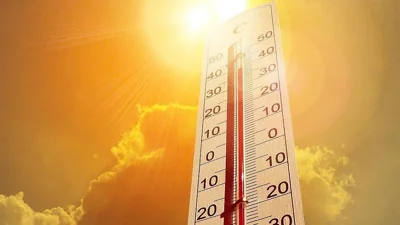
Heat and Smog Grip Thane
The ground-level ozone layer in Thane has reached 188, placing it in the “unhealthy” category. According to the official data from the Municipal Corporation, the first 20 days of this month saw 10 days of extremely polluted air. In early March, temperatures have already touched 41 degrees Celsius, causing citizens to suffer.
Experts note a close correlation between rising heat and pollution. Particulate matter (PM10) has been recorded at around 130, crossing dangerous thresholds. High temperatures cause a chemical reaction between vehicle exhaust, industrial emissions, and construction dust, leading to the formation of ground-level ozone.
The rapid urbanisation of the city and the shrinking of green spaces have created an Urban Heat Island effect. During the day, concrete structures absorb intense heat, and because of this stored heat, the city fails to cool down naturally at night, depriving citizens of any relief.
Doctors have warned that this pollution acts as a “silent killer.” The current conditions have led to an increased risk of respiratory diseases and heart diseases.
Environmental experts, including Dr. Prashant Sinkar, emphasise that this is part of the larger climate change crisis. If administration does not take immediate action, Thane will soon become a desert. The government should initiate measures such as controlling construction dust, strengthening public transport to reduce vehicle emissions, massive tree plantation drives, and moving beyond ‘paperwork’ to real-world pollution control on a war footing.