
The Case for a Modular SWRO Desalination Plant
Tackling Thane’s Water Crisis
Thane is facing a severe water crisis in many parts of the city. Under typical circumstances, the city’s current water supply of 590 MLD (Million Liters Per Day) is insufficient by 30–40 MLD. The present El Niño impact, which the Indian Meteorological Department (IMD) forecasts would decrease monsoon rains to below normal levels, has made this gap extremely critical. It is thus anticipated that Thane’s peak dry-season deficit would get worse. Thane is extremely vulnerable if it depends just on the freshwater resources that are now available.
Statistics at a glance:
Thane houses a population of 27.5 lakh, growing at a pace of 5% to 6% each year. Overall demand is expected to almost quadruple to 1,150 MLD by 2035.
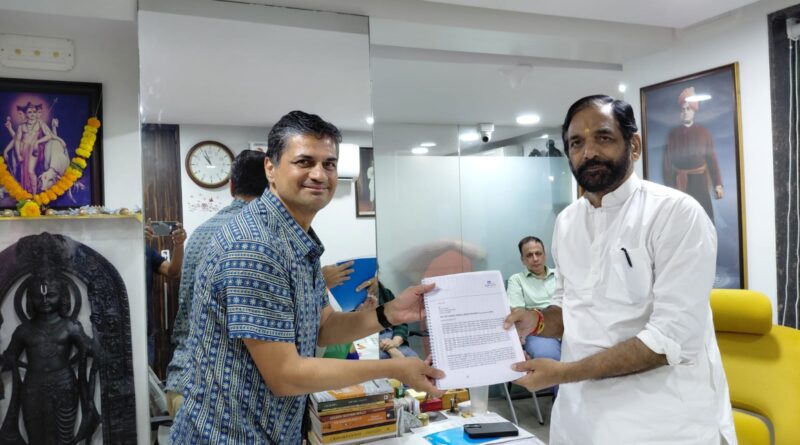
Saurabh Bhat, a chemical engineer residing in Thane, recently detailed a report through thorough research and suggested a ₹1,000 crore modular Seawater Reverse Osmosis (SWRO) desalination facility. He did his BTech from IIT Bombay, an MBA in Finance from XLRI Jamshedpur and held senior positions including Group president and managing director at Yesbank.
In order to protect the main RO system from seasonal algal blooms and stream turbidity, the plant will be expected to produce an initial 50 MLD that can be scaled to 100 MLD by 2035 using Dissolved Air Flotation (DAF), Dual Media Filtration, and Ultrafiltration Membranes.
A similar 2017 proposal was previously shelved due to public opposition over environmental and cost concerns. The report mentions proper ocean disposal of brine, which is a highly concentrated salty discharge that causes environmental damage. The proposed Thane Creek plant (near Vashi/Airoli) leverages high salinity and strong tidal flushing for safer dispersal. To protect the Flamingo Sanctuary and mangroves, the design features advanced multi-port diffusers and sub-surface infiltration galleries. A 70–75 MW solar plant will supply 60% of daytime energy, while Energy Recovery Devices (ERDs) recycle 30–40% of wasted pressure to cut costs and emissions.
“It is critical to follow through with this scheme because regardless of whether the upcoming monsoon brings heavy or light rainfall, we still have to face water shortages. Our goal is to ultimately make Thane a “tanker-free” city. Despite buying premium apartments in Thane, residents still end up paying lakhs in water tanker bills. We must urgently implement long term as well as immediate short term schemes to resolve this issue. I have personally submitted due applications with the authorities highlighting this issue.”- MLA Sanjay Kelkar
While the TMC is actively progressing with an ongoing 100 MLD Advanced Recycling Plant at the Kopri STP facility to produce Treated Used Water (TUW) for industrial use, recycling alone cannot fix the fundamental supply. The availability of freshwater is an essential requirement for advanced recycling. Both projects are quite complimentary as desalination adds fresh water to the system.
Engineering Risks and Preventions
The idea uses technology proven successful by Indian precedents, such as Chennai’s long-running SWRO plants, to get over obstacles in coastal engineering. To stabilise the deep marine clay without upsetting nearby mangrove roots, it substitutes conventional foundations with vibro-replacement (stone columns), raft foundations, and helical piles. In order to increase the structure’s design life to more than 50 years, the facility will additionally employ thick High-Volume Fly Ash concrete and glass fiber reinforced polymer rebar.
Financial Backing
Backed by an AA rating from CRISIL and an annual operating surplus exceeding 800 crore, the TMC is in a strong position to fund the 1000 crore capita expenditure. However, it is important to note that this only includes the construction cost. Production cost is estimated at ₹40-50 per 1,000 Liter. The project utilises a blended financing structure including multilateral loans (IFC/ADB), central AMRUT 2.0 grants, and municipal bonds. The accompanying 75 MW solar plant will use a PPP model, with Maharashtra State Government holding a 26% equity stake.
However, maritime megaprojects in the Mumbai Metropolitan Area require more time. Mangrove safeguards require mandatory permissions from the Bombay High Court, the MoEFCC, and the Maharashtra Coastal Zone Management Authority, which can take 26–34 months. The total duration can take up to 6 to 8 years.
Why is this urgent?
The familiar sight of private water tankers has changed from an occasional summer backup to a year-round need as housing complexes expand along Ghodbunder Road, Majiwada, and Pokhran. Treating brackish (semi-salty) stream water takes far less pressure and energy than ocean desalination, despite the latter being extremely energy-intensive. This allows Thane to produce a consistent 20–50 MLD of usable water without creating a significant carbon impact or using municipal energy budget by setting up small, solar-powered brackish water treatment facilities along less contaminated sections of the creek. Thane has to move fast since its own demand curve is still rising, while Mumbai has already advanced its 200 MLD Manori plant to safeguard its water supply.
“Thane is facing a shortage of approximately 30-40 MLD. Due to the rapid growth in construction of new complexes around the Ghodbunder area, demand for water supply has risen. We already have an STP plant and we need more projects like desalination since we will soon exhaust water supply from rivers or underground. We have also held a few meetings with authorities regarding this. This water crisis is not limited just to Thane, but also includes parts of BMC,” said Vinod Pawar, Head of Water Department TMC